
Aesthetic surgery
Ear surgery
A short, well-established operation, most often done for a reason that has nothing to do with appearance in photographs and everything to do with not thinking about it.
What this treatment involves
Otoplasty — ear pinning — reshapes the cartilage framework of the ear so that it sits closer to the head. Prominent ears are usually the result of one or both of two things: an antihelical fold that did not form fully, and a conchal bowl that is deeper than average and pushes the ear outwards.
The operation is done through an incision behind the ear. Depending on which of the two causes is present, the surgeon creates or strengthens the antihelical fold with permanent sutures, scores the cartilage so it curves, reduces the conchal cartilage, or a combination.
It is one of the few aesthetic operations commonly performed in childhood, usually from around five or six once the ear has reached most of its adult size. In adults it is straightforward, though adult cartilage is stiffer and holds its new shape less readily than a child’s.
Who may be suitable
Considered for children from about five or six years old and for adults with prominent or asymmetric ears, or with a deformity of the ear’s shape.
General health, absence of ear infection at the time of surgery, and realistic expectations are the practical requirements. Ears are almost never perfectly symmetrical, before or after, and the goal is a natural position rather than a mirror image.
For children, the child’s own view matters. An operation performed on a child who does not want it, for a parent’s reasons, is a different proposition from one performed on a child who has asked for it — and a careful surgeon asks the child directly.
Why patients choose it
The result is immediate in position and stable once healed. For an operation of its size it has an unusually direct effect: patients — adults and children alike — most often describe the change as no longer thinking about their ears, rather than as a change in appearance.
The scar sits in the crease behind the ear where it is not visible in normal view.
It does not affect hearing. The operation is on the external cartilage only and does not enter the ear canal or the middle ear.
How treatment works

Consultation and examination
Day 1
The surgeon establishes which of the two causes of prominence is present — an absent antihelical fold, an over-deep conchal bowl, or both — since the technique follows from that.
Planning
Day 1
Measurements and photographs, and a discussion of what degree of correction looks natural. For children, the child is included in the conversation.
Surgery
Day 2
Usually one to two hours. Local anaesthetic with sedation for most adults; general anaesthetic for children.
First dressing change
Day 3–7
The head bandage is removed and the ears checked. The team confirms when it is safe to fly.
Headband period
2–6 weeks
A soft headband at night protects the position while healing consolidates. Skipping this is the commonest cause of an ear drifting forward again.
What happens in Istanbul
Facial surgery requires a stay of seven to ten days. Consultation, examination and pre-operative tests take the first day or two, followed by surgery and, depending on the procedure, one night in hospital or a same-day discharge. You then remain in Istanbul for review and for removal of sutures before flying. Departure is confirmed by the surgical team rather than by your booking — flying too soon after surgery raises the risk of swelling and blood clots.
Recovery
A head bandage is worn for the first several days to protect the position while the cartilage settles. After that, a soft headband is usually worn at night for several weeks — mainly to prevent the ear being folded forward during sleep, which is the commonest way an early result is disturbed.
The ears are swollen, tender and numb initially, and the numbness can persist for some weeks. Sutures behind the ear come out or dissolve at one to two weeks.
Normal activity resumes within a week or two; contact sports and swimming wait four to six weeks. The final shape is apparent once swelling settles, generally within a month, though small changes continue for longer.
Typical recovery
A head bandage protects the position while the cartilage settles.
Sutures behind the ear come out or dissolve. The ears are swollen, tender and numb.
Normal activity resumes.
A soft headband at night, to stop the ear being folded forward in sleep — the commonest way an early result is disturbed.
Contact sports and swimming. The final shape is generally apparent within a month.
A usual course, not a schedule you have been given. Recovery varies considerably between people, and the full recovery information above is what your own plan is based on.
Risks and considerations
Bleeding under the skin (haematoma) is the most important early complication, because a collection of blood over cartilage can damage it if not evacuated promptly. Severe or one-sided pain in the first days is the warning sign and should be reported immediately rather than waited out.
Infection of ear cartilage is uncommon but serious, and can permanently distort the ear’s shape.
The sutures that hold the new fold can loosen, break or become palpable, and the ear can partly return towards its previous position — this is the most frequent reason for revision surgery. Over-correction produces an ear pinned too flat against the head, which looks as unnatural as prominence and is harder to correct than to prevent.
Asymmetry between the two ears is common to a small degree. Scarring behind the ear is usually inconspicuous but can thicken or form keloid, more often in people with darker skin or a personal history of keloid. Numbness and sensitivity to cold can persist.
This information is general and educational. Whether a procedure is appropriate for you can only be determined by a qualified medical professional after an individual assessment, including your medical history and an examination.
Common questions
Does ear surgery affect hearing?
No. The operation reshapes the cartilage of the external ear and does not involve the ear canal, the eardrum or the middle ear, which are the structures that carry sound. Hearing may feel muffled while the head bandage is on, but that is the dressing, not the surgery.
Further reading
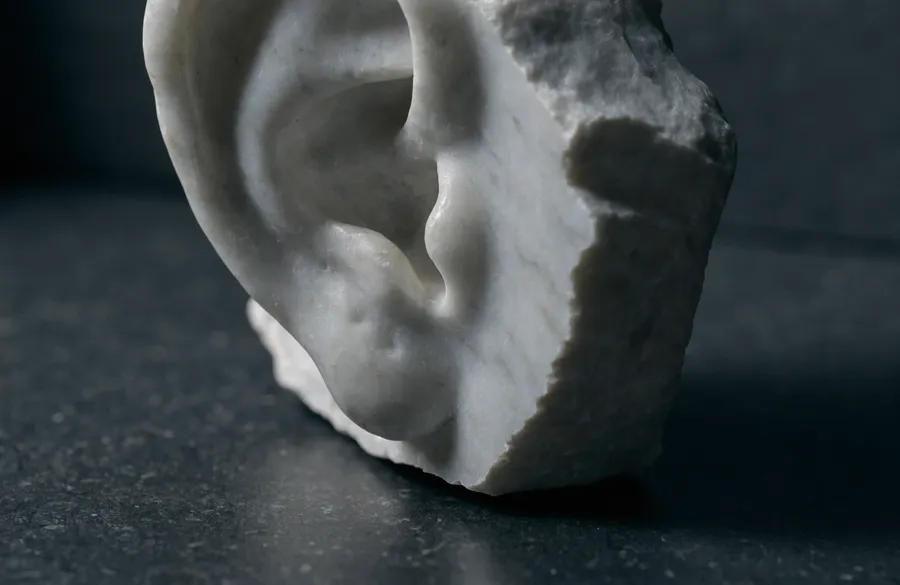
Ear surgery: what otoplasty actually changes
Prominent ears usually come down to two things — a missing fold in the cartilage, or a bowl of cartilage that is too deep. The operation reshapes cartilage rather than cutting the ear back.

Intimate surgery: the questions to ask first
Labiaplasty, vaginoplasty and penile enhancement are three different operations with one thing in common: the most important conversation happens before anyone discusses technique.
Abdominal etching: who it suits, and who it does not
It sculpts shadows over muscle that is already there. It does not build muscle, and on the wrong patient — or after later weight gain — the lines can look drawn on.


Let's plan your treatment
Send us your details and a treatment coordinator will guide you through the next step.