Aesthetic surgery
Buttock fat transfer
This operation has the highest reported death rate of any cosmetic procedure. What follows explains why, and what technique reduces it — because that is the part you need before deciding.
What this treatment involves
Buttock fat transfer, widely called a Brazilian butt lift, takes fat by liposuction from areas such as the abdomen, flanks or back, purifies it, and injects it into the buttocks to change their shape and projection. Because it uses the patient’s own tissue, it involves no implant and, for the donor areas, doubles as a contouring procedure.
The safety issue is where the fat is placed. If fat is injected into or beneath the gluteal muscle, it can enter the large gluteal veins and travel to the lungs — a macroscopic fat embolism, which is frequently fatal. This mechanism is what gave the operation the highest mortality rate of any cosmetic procedure in the published literature.
Practice changed in response. Current guidance from plastic surgery bodies is that fat must be placed only in the subcutaneous layer above the muscle, that the cannula be kept angled away from the deep tissue, and that ultrasound guidance be used to confirm the plane in real time. Reported mortality has fallen substantially where these are followed.
A proportion of the transferred fat does not survive — commonly cited as roughly a third, though it varies — so the result at three months is smaller than the result on the table. That is expected, and it is why some patients need a second session rather than a sign that anything went wrong.
Who may be suitable
Considered for adults at a stable weight who have enough donor fat to harvest — which is the practical limit, since very lean patients often do not — and who are in good general health.
Weight stability matters unusually much. Transferred fat behaves like the fat it came from: it grows if you gain weight and shrinks if you lose it, so significant weight change after surgery alters the result in either direction.
Smoking impairs the survival of transferred fat as well as wound healing.
Because of the risk profile, the question of *where* you have this operation matters more than for almost any other procedure. Whether ultrasound guidance is used, what plane the surgeon injects into, and what monitoring is available are reasonable things to ask directly, and a straight answer is a reasonable thing to expect.
Why patients choose it
The material is your own tissue, so there is no implant, no device with a service life, and no risk of capsular contracture or implant rupture.
The donor areas are contoured by the liposuction that harvests the fat, so the change in shape is to the waist and flanks as well as to the buttocks.
Fat that survives the first few months has established a blood supply and is generally permanent, subject to weight change.
How treatment works

Consultation and assessment
Day 1
Donor areas are assessed for how much fat can safely be harvested, and buttock shape and skin quality examined. Not every patient has enough donor fat for the change they have in mind, and that is established here.
Planning and safety discussion
Day 1–2
Donor sites, volume and technique are agreed. This is the point to ask about injection plane and ultrasound guidance, and to get a direct answer.
Pre-operative tests
Day 2
Blood tests, ECG and anaesthetic review, with clot-risk assessment.
Surgery
Day 3
Under general anaesthetic, generally two to four hours: liposuction to harvest, processing of the fat, then injection into the subcutaneous layer.
Hospital stay
Day 3–5
One or two nights with monitoring. Early walking for clot prevention.
Review and garment
Day 5–10
Wounds checked and the compression garment fitted for the donor areas. Sitting restrictions explained in detail.
Fit to fly
Day 10–12
Confirmed by the surgical team, taking into account both clot risk and the sitting restriction on a long flight.
Fat settling
3–6 months
Volume reduces as unsurvived fat is reabsorbed. The result is assessed at three months.
What happens in Istanbul
Body contouring surgery requires a stay of eight to twelve days, longer than most other procedures because of the risk of blood clots after surgery on the trunk and limbs. Consultation, examination and pre-operative tests take the first day or two, followed by surgery and one or two nights in hospital. You then remain in Istanbul for review, drain removal and wound checks. Departure is confirmed by the surgical team rather than by your booking — flying too soon after body surgery is one of the clearest avoidable risks in medical travel.
Recovery
Sitting is restricted. Direct pressure on the buttocks compresses the transferred fat and reduces how much of it survives, so patients are advised to avoid sitting directly for around two weeks and then to use a cushion that takes weight on the thighs for several weeks more. Sleeping is on the front or side.
A compression garment is worn on the donor areas for six to eight weeks. Those areas are usually more uncomfortable than the buttocks themselves — bruising and swelling from liposuction is what most patients describe as the painful part.
Walking starts on the first day for clot prevention. No strenuous activity for four to six weeks.
The result is largest immediately and reduces over about three months as the unsurvived portion is reabsorbed. The shape at three months, not the shape on day one, is the result.
Typical recovery
No sitting directly on the buttocks — pressure compresses the transferred fat and reduces how much survives.
A cushion that takes weight on the thighs. Sleeping on the front or side.
Compression on the donor areas, which are usually more uncomfortable than the buttocks.
No strenuous activity. Walking starts on day one for clot prevention.
The result is largest immediately and reduces as unsurvived fat is reabsorbed. Three months is the result, not day one.
A usual course, not a schedule you have been given. Recovery varies considerably between people, and the full recovery information above is what your own plan is based on.
Risks and considerations
Fat embolism is the risk that distinguishes this operation. Fat entering the gluteal venous system can travel to the lungs and cause sudden collapse; it is the reason for the highest reported mortality of any cosmetic procedure, and the reason for subcutaneous-only injection and ultrasound guidance. It is rare, and it is not eliminated.
Infection can occur in the buttock or in the donor sites, and infection in a large volume of transferred fat can be serious.
Fat necrosis produces firm lumps that may take months to soften, may need drainage, and occasionally require excision. Oil cysts can form.
Asymmetry between the two sides, contour irregularity in the donor areas, over- or under-correction, and unpredictable fat survival requiring a second session are all common enough to expect rather than to be surprised by.
As with any operation on the trunk, blood clots are a risk, raised by a long operation and reduced mobility afterwards. Prolonged sitting restrictions and travel plans need to be considered together.
This information is general and educational. Whether a procedure is appropriate for you can only be determined by a qualified medical professional after an individual assessment, including your medical history and an examination.
Common questions
Is a BBL safe?
It carries the highest reported mortality of any cosmetic operation, and no honest answer starts anywhere else. The cause is fat entering the large veins of the buttock and travelling to the lungs, which happens when fat is placed into or under the gluteal muscle. Where surgeons inject only into the subcutaneous layer above the muscle and use ultrasound to confirm the plane during the operation, reported deaths have fallen substantially. So the risk is real, it is specific, and it is largely determined by technique. Ask directly which plane your surgeon injects into and whether ultrasound guidance is used — that is a reasonable question and you should get a straight answer.
Further reading
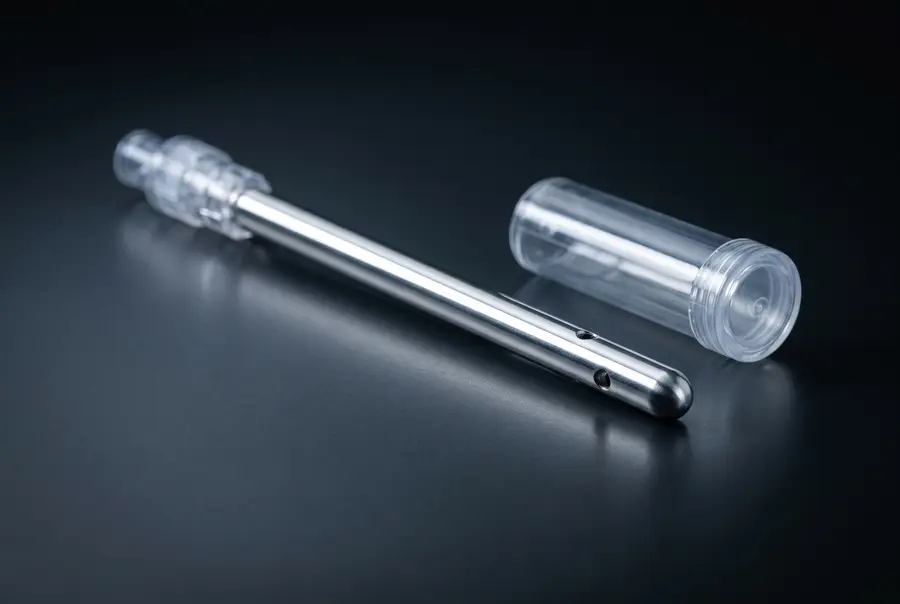
What to know before a Brazilian butt lift
This is the cosmetic operation with the highest reported mortality, and the reason is well understood. Anybody considering it should know what that reason is, and what a surgeon does about it.
Intimate surgery: the questions to ask first
Labiaplasty, vaginoplasty and penile enhancement are three different operations with one thing in common: the most important conversation happens before anyone discusses technique.
Abdominal etching: who it suits, and who it does not
It sculpts shadows over muscle that is already there. It does not build muscle, and on the wrong patient — or after later weight gain — the lines can look drawn on.


Let's plan your treatment
Send us your details and a treatment coordinator will guide you through the next step.