
Dental
Dental implants
A replacement for the root of a missing tooth, providing a fixed foundation for a crown that is cleaned and used like a natural tooth.
What this treatment involves
A dental implant is a small titanium post placed into the jawbone in the position of a missing tooth root. Over the following weeks the bone integrates with the surface of the implant, a process called osseointegration, which anchors it in place.
Once integration is confirmed, an abutment is attached and a crown is fitted on top. The result is a fixed restoration that is not attached to the neighbouring teeth, so healthy adjacent teeth do not need to be reshaped as they would to carry a conventional bridge.
Who may be suitable
Implants are generally considered for adults who have lost one or more teeth and have enough healthy jawbone to hold the implant, or who are suitable for a bone graft to build up the site.
Several factors affect whether treatment is appropriate: gum health, uncontrolled diabetes, smoking, some medications affecting bone metabolism, and a history of radiotherapy to the jaw. These are assessed individually — none of them automatically rules treatment out, and none of them can be judged from a photograph.
Why patients choose it
An implant-supported crown is fixed, so it does not move while eating or speaking, and it is cleaned with a brush and interdental aids rather than removed.
Because the implant transfers chewing forces into the bone, it helps maintain the bone volume at the site, which tends to reduce over time where a tooth has been lost. Adjacent teeth are left intact.
How treatment works

Assessment and planning
Visit 1, day 1
A clinical examination and a CBCT scan establish bone volume and the position of nerves and the sinus. This determines whether an implant is appropriate and where it can be placed.
Any preparatory treatment
Extractions, treatment of gum disease, or a bone graft where the site needs building up. Grafting requires healing time before an implant can be placed.
Implant placement
Visit 1
The implant is placed under local anaesthetic. A temporary restoration may be fitted where appropriate.
Integration
3–6 months
The bone integrates with the implant surface. You return home during this period and are reviewed remotely.
Abutment and final crown
Visit 2
Once integration is confirmed, impressions are taken and the permanent crown is fitted and adjusted.
Follow-up
Cleaning technique is reviewed and a long-term maintenance schedule is agreed with your dentist at home.
How the parts fit together
1. The site
The bone and gum where a tooth is missing.
2. The implant
A titanium post placed in the bone under local anaesthetic.
3. The abutment
The connector between the post and the crown.
4. The crown
The visible part, fitted once the bone has integrated.
A schematic diagram, not an anatomical drawing. It shows how the parts fit together and in what order; it is not to scale and does not represent any individual anatomy. Your own treatment is planned from your scan.
What happens in Istanbul
Most dental treatments are completed across two visits to the clinic within a single trip, typically five to seven days apart. Your coordinator confirms the schedule before you travel so you know how many appointments to expect and how much free time you will have between them. Airport transfers and accommodation arrangements are confirmed in writing before departure.
Recovery
Most people return to everyday activity the day after implant placement. Swelling and discomfort around the site are common for the first two to three days and are usually managed with prescribed pain relief.
A soft diet is advised while the surgical site settles. Integration of the implant with the bone typically takes around three to six months, after which the final crown is fitted — which is why implant treatment is usually completed across two trips.
Typical recovery
Most people return to everyday activity.
Swelling and discomfort around the site are common, usually managed with prescribed pain relief.
A soft diet is advised while the surgical site settles.
The implant integrates with the bone. You are home for this period and reviewed remotely.
Once integration is confirmed, the final crown is fitted — which is why implant treatment usually takes two trips.
A usual course, not a schedule you have been given. Recovery varies considerably between people, and the full recovery information above is what your own plan is based on.
Risks and considerations
Implant placement is a surgical procedure and carries the risks common to oral surgery: infection at the site, bleeding, swelling and bruising.
Specific risks include failure of the implant to integrate with the bone, which requires removal and, in some cases, a further attempt after healing; damage to adjacent teeth or nerves, which can cause altered sensation in the lip or chin; and sinus complications for implants placed in the upper jaw. Peri-implantitis, an inflammatory condition affecting the tissue around an implant, can develop later and is strongly associated with smoking and with inadequate cleaning.
Long-term outcome depends heavily on daily cleaning and regular professional review after treatment.
This information is general and educational. Whether a procedure is appropriate for you can only be determined by a qualified medical professional after an individual assessment, including your medical history and an examination.
Systems used for this procedure
The manufacturers whose systems are used here, so you can check them yourself rather than take our word for it.
Straumann
A Swiss dental implant manufacturer, among the most widely used and most extensively documented systems in implant dentistry.
Nobel Biocare
A dental implant manufacturer with Swedish origins, and the company behind the original All-on-4 protocol.
MegaGen
A South Korean dental implant manufacturer, known internationally for the AnyRidge implant system.
BEGO
A German manufacturer of dental implants, prosthetic components and dental laboratory materials.
Naming a manufacturer is not a claim that one system produces a better result than another. Outcomes depend far more on planning, on the surgery itself and on how you heal than on whose system is used. Ask for the make, model and reference number of anything implanted, in writing, before you travel home.
Common questions
How long does implant treatment take from start to finish?
Placement itself takes one appointment. The waiting period while the implant integrates with the bone is usually three to six months, and the final crown is fitted after that — so treatment is normally completed across two trips rather than one.
Is the procedure painful?
Placement is carried out under local anaesthetic, so the procedure itself should not be painful. Discomfort, swelling and bruising in the days afterwards are common and are managed with prescribed pain relief. Tell your clinician about any anxiety before treatment — sedation options can be discussed.
Does smoking affect implant treatment?
Yes. Smoking is associated with slower healing, a higher rate of implant failure, and a considerably higher risk of peri-implantitis in the years after treatment. Your clinician will discuss this with you as part of the assessment.
Further reading
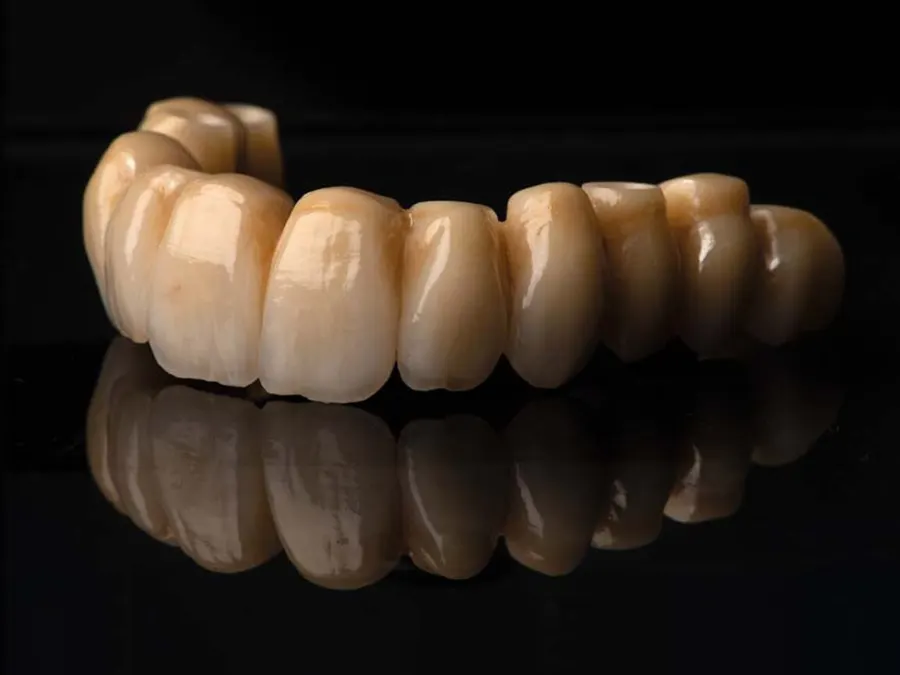
All-on-4: a full arch of teeth on four implants
Four implants, two of them angled, carrying a fixed bridge. The angling is the whole idea — it reaches solid bone without a graft, and it is why the technique exists.
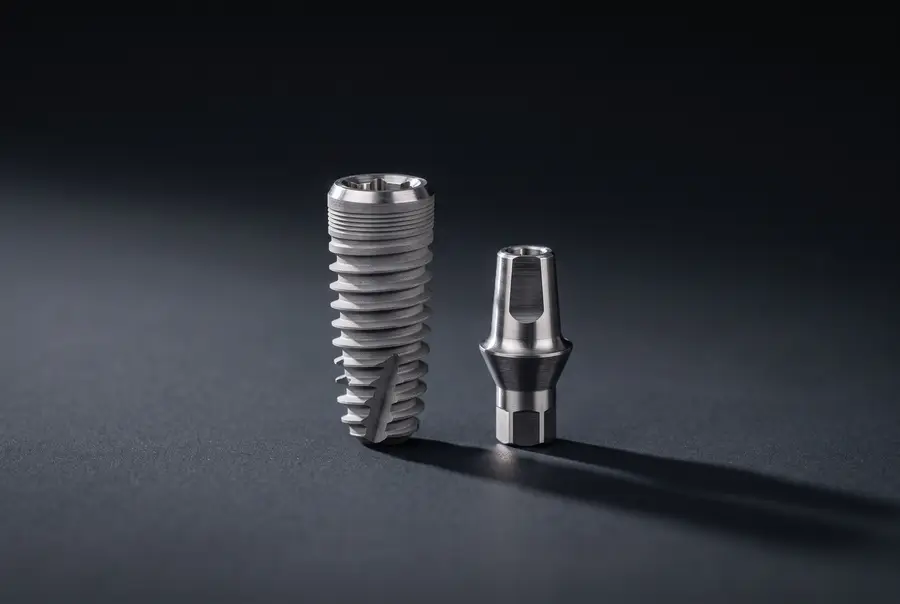
What actually happens during a dental implant
An implant is not one appointment. It is a small titanium post, a healing period while bone grows onto it, and a crown made afterwards. Here is the sequence, and why the waiting is the part that does the work.
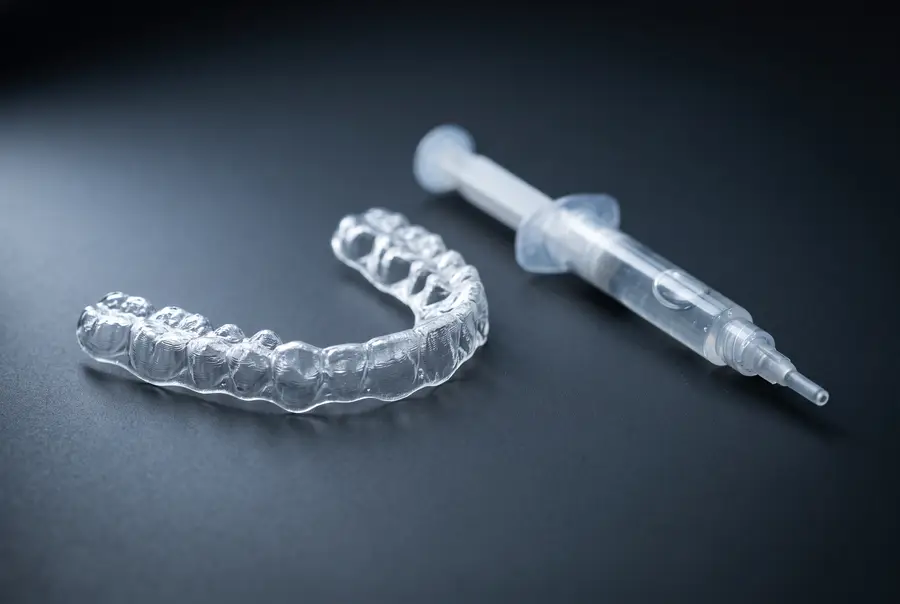
Teeth whitening: what works, and what it cannot do
Whitening changes the colour of natural tooth structure. It does nothing to a crown, a veneer or a filling — which is why the order of treatment matters more than the product.


Let's plan your treatment
Send us your details and a treatment coordinator will guide you through the next step.