
Dental
Hollywood smile
Worth being clear about: this is a description of a result, not an operation. What it actually involves is veneers, crowns, or a combination — and which one matters.
What this treatment involves
"Hollywood smile" is a marketing term, not a clinical procedure. No dental school teaches it and no textbook defines it. It describes an outcome — a uniform, bright, symmetrical set of front teeth — usually achieved by placing veneers or crowns across the teeth visible when you smile, typically eight to twenty of them.
That matters because the phrase can hide very different treatments with very different consequences. Veneers remove a thin layer of enamel from the front surface. Crowns reduce the whole tooth on all sides. Both are permanent, but one removes considerably more tooth than the other.
A clinic quoting for a "Hollywood smile" without telling you which of those it involves, on which teeth, is not giving you enough information to consent.
Who may be suitable
A smile makeover is considered where several front teeth need changing together — for shade that whitening cannot correct, worn or chipped edges, uneven shape, or spacing.
It is not appropriate as a way to straighten teeth that orthodontics could align. Moving a tooth with a brace or aligner keeps it intact; covering a crooked tooth with a veneer means cutting it down to make room. Where the underlying position can be corrected, correcting it first is usually the more conservative route, even though it takes longer.
Healthy gums and no active decay are prerequisites, and untreated grinding needs managing first.
Why patients choose it
Treating several teeth together allows shape, shade, proportion and symmetry to be considered as a whole rather than tooth by tooth, which is what produces an even result.
Ceramic resists staining better than natural enamel, so the shade chosen tends to hold. Where teeth are genuinely worn or damaged, restoring them also protects what remains.
How treatment works

Assessment
Day 1
Examination, X-rays and photographs. Which teeth show when you smile is measured rather than assumed, and gum health and grinding are assessed.
Choosing veneers or crowns
Day 1
The clinician explains which is appropriate for each tooth and why. Teeth that are sound may need only veneers; heavily filled teeth may need crowns.
Design mock-up
Day 1–2
A digital design or wax mock-up shows the proposed shape and proportion before any tooth is prepared. Change your mind here, not later.
Preparation and temporaries
Day 2
Teeth are prepared under local anaesthetic and temporary restorations fitted so you are never without front teeth.
Laboratory work
4–6 days
The restorations are made to the agreed design.
Try-in and fitting
Day 6–7
Tried in for fit, shade and appearance before being bonded permanently.
What happens in Istanbul
Most smile makeovers are completed across two clinic visits in a single trip of five to seven days: preparation and temporaries at the start, the finished restorations at the end. Where many teeth are involved, or where gum treatment is needed first, the plan may need a longer stay or a second trip — your coordinator confirms which before you book flights.
Recovery
There is no surgical recovery. Sensitivity for a week or two after preparation is common.
Temporary restorations are worn between appointments and are more fragile than the finished ones. Speech can feel slightly different for a few days after fitting, particularly if the shape or length of the front teeth has changed noticeably.
Risks and considerations
Every risk of veneers or crowns applies here, multiplied by the number of teeth treated. Preparation is permanent: those teeth will need restorations for the rest of your life, and each one will eventually need replacing.
The more teeth prepared, the higher the chance that at least one nerve becomes irritated and needs root canal treatment. Restorations can chip, fracture or debond, and grinding makes that considerably more likely.
Very bright, very uniform shades look artificial against your own skin, eyes and lip line, and cannot be undone once the teeth are prepared. Shade and shape are chosen before manufacture — a mock-up beforehand is the only reliable way to know what you are agreeing to.
Be cautious of any recommendation to crown healthy, well-positioned teeth purely for appearance when veneers or orthodontics would achieve the same result with less tooth removed.
This information is general and educational. Whether a procedure is appropriate for you can only be determined by a qualified medical professional after an individual assessment, including your medical history and an examination.
Systems used for this procedure
The manufacturers whose systems are used here, so you can check them yourself rather than take our word for it.
IPS e.max
A lithium disilicate glass-ceramic made by Ivoclar Vivadent, used for veneers, inlays and single crowns.
Dental Direkt
A German manufacturer of zirconia blanks and dental CAD/CAM materials used to mill crowns and bridges.
Naming a manufacturer is not a claim that one system produces a better result than another. Outcomes depend far more on planning, on the surgery itself and on how you heal than on whose system is used. Ask for the make, model and reference number of anything implanted, in writing, before you travel home.
Common questions
Is a Hollywood smile an actual procedure?
No. It is a marketing description of a result. The treatment underneath is veneers, crowns, or a combination — and you should be told exactly which, on exactly which teeth, before agreeing to anything.
How white should I go?
Shades much brighter than the whites of your eyes tend to read as artificial in daylight and in photographs. The shade is chosen before the restorations are made and cannot be lightened or darkened afterwards without replacing them, so seeing a mock-up in natural light first is worth the extra appointment.
Should healthy teeth be crowned for appearance?
Generally not, if veneers or orthodontics could achieve the same result. A crown removes tooth structure from every surface; a veneer removes a thin layer from one. Where a tooth is sound and reasonably positioned, the more conservative option is usually the right one — and any clinic should be able to explain why it is proposing otherwise.
Further reading
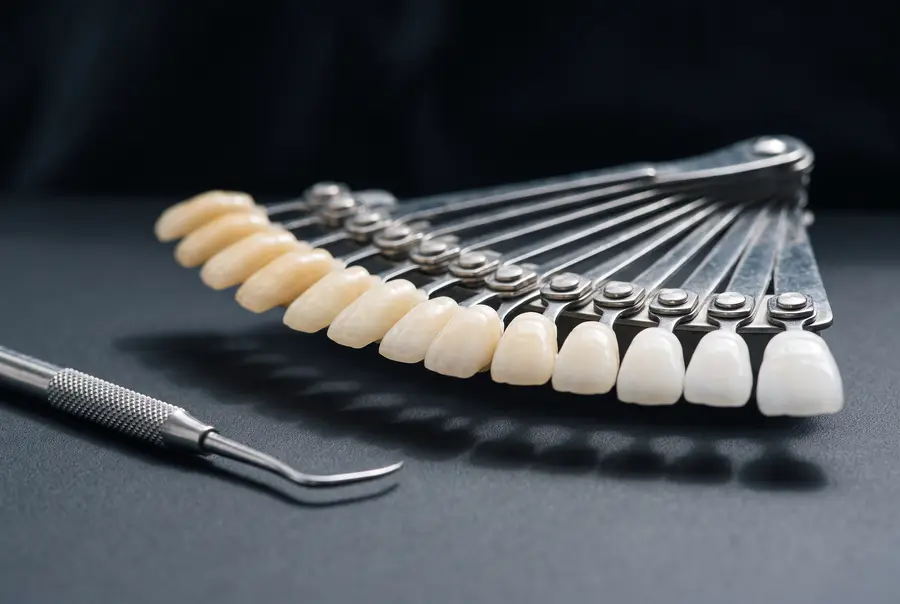
What a "Hollywood smile" actually is
It is a marketing phrase, not a procedure. Underneath it sits anything from whitening to twenty crowns, and the difference between those matters more than any photograph.
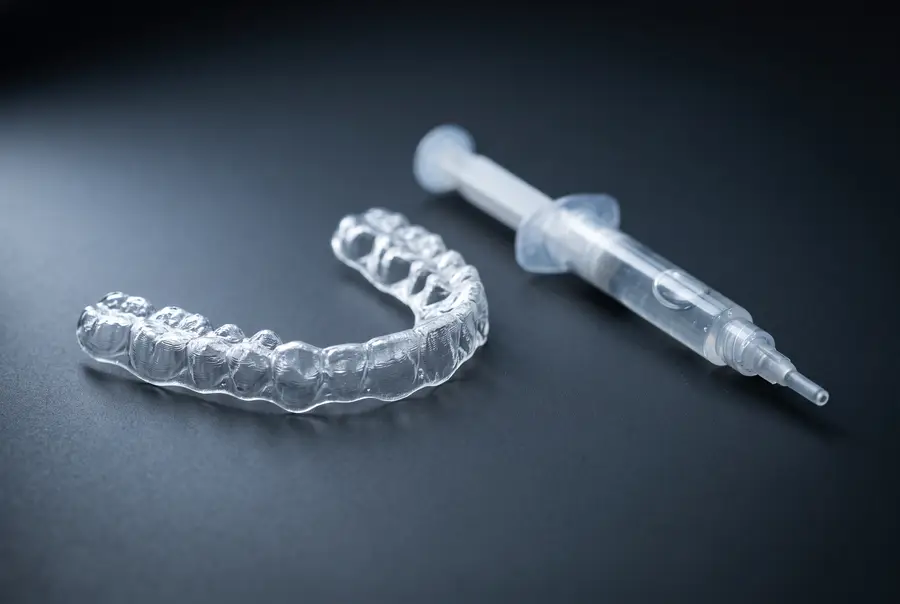
Teeth whitening: what works, and what it cannot do
Whitening changes the colour of natural tooth structure. It does nothing to a crown, a veneer or a filling — which is why the order of treatment matters more than the product.
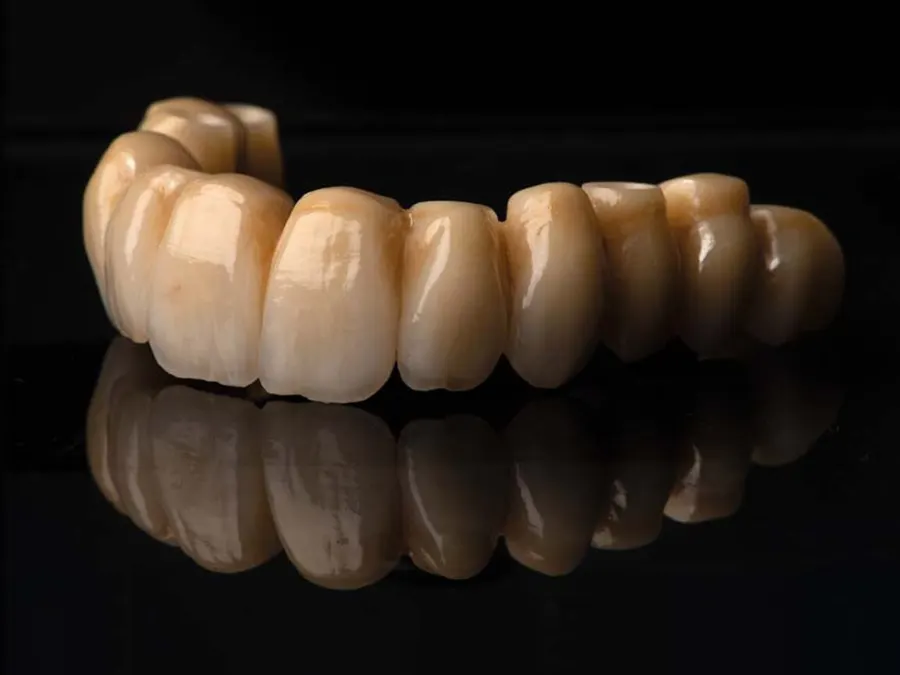
All-on-4: a full arch of teeth on four implants
Four implants, two of them angled, carrying a fixed bridge. The angling is the whole idea — it reaches solid bone without a graft, and it is why the technique exists.


You may also consider
E-max veneers
Thin lithium-disilicate shells bonded to the front of the teeth to change their shape, shade or alignment.
Zirconium crowns
A tooth-coloured crown made from zirconia, used to restore a damaged tooth or cover an implant.
Teeth whitening
A peroxide gel used to lighten the natural shade of the teeth, in the clinic or with custom trays at home.
Let's plan your treatment
Send us your details and a treatment coordinator will guide you through the next step.